


How Do Solar Panel and Battery Capacity Affect High-Power Solar Garden Light Performance?
Solar panel and battery capacity directly determine how effectively a high-power solar garden light can generate, store, and deliver energy. The solar panel controls how much energy can be harvested during daylight hours, while the battery determines how much of that energy can be stored for nighttime operation. If either component is undersized, lighting performance may decline during long operating hours or periods of poor weather. For this reason, choosing a high-power solar LED garden light requires more than comparing LED wattage; buyers need to evaluate solar generation, battery storage, lighting demand, operating time, and local sunlight as one energy system.
Why Do Solar Panel and Battery Capacity Need to Be Matched?
A solar lighting system follows a simple daily energy cycle. During the day, the solar panel converts sunlight into electrical energy and charges the battery. After sunset, the stored energy powers the LED lighting system. The balance between these two stages determines whether the fixture can operate consistently.
| Component | Primary function | Effect on lighting performance |
|---|---|---|
| Solar panel | Generates electricity during daylight | Determines how quickly the battery can be replenished |
| Battery | Stores generated energy | Determines available nighttime energy |
| LED module | Converts electricity into light | Determines energy consumption and illumination output |
| Controller | Manages charging and discharge | Coordinates energy use and protects system components |
A well-designed configuration should generate enough energy during the available sunlight period to replenish the battery after normal nighttime consumption. At the same time, the battery needs sufficient usable capacity to support the required lighting schedule without excessive depth of discharge.
What Does Solar Panel Wattage Actually Tell You?
Solar panel wattage represents the panel's rated power under specified test conditions, but real-world energy production depends on more than the nominal number. Sunlight intensity, weather, panel orientation, shading, temperature, and seasonal conditions can all affect daily energy generation.
For example, a panel with a higher rated output can generally provide more charging potential when adequate sunlight is available. This becomes increasingly important for high-power lighting systems because greater LED loads require more energy to maintain the same operating schedule.
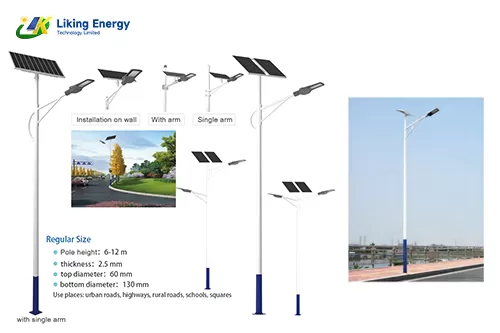
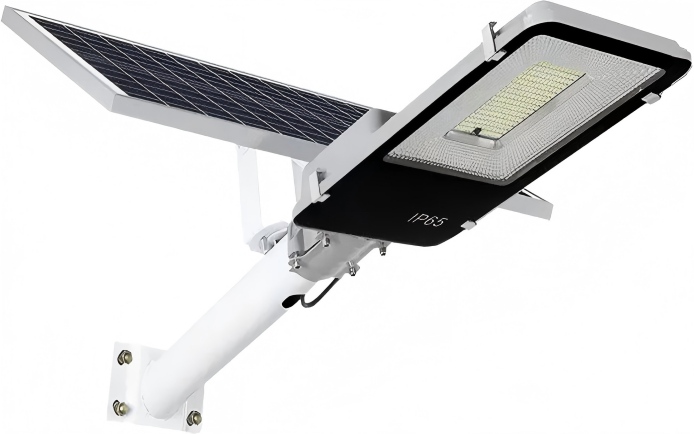
High-efficiency monocrystalline silicon panels can help make better use of available installation space. For split-type solar lighting, the panel can also be positioned independently from the lamp, giving project designers greater flexibility when selecting an installation location with better solar exposure.
How Does Battery Capacity Affect Nighttime Runtime?
Battery capacity determines how much electrical energy can be stored for use after sunset. In general terms, a larger usable battery reserve allows a lighting system to support longer operating periods or maintain greater energy availability during consecutive days with reduced solar generation.
However, simply installing the largest possible battery is not always the best solution. The solar panel must have enough generation capacity to recharge the battery effectively. Otherwise, a large battery may remain partially charged for extended periods, reducing the expected energy reserve.
Battery chemistry is also important. LiFePO4 batteries are widely used in modern solar lighting because they offer characteristics suitable for repeated charge and discharge cycles. When evaluating battery specifications, buyers should consider not only nominal capacity but also usable capacity, charging efficiency, temperature conditions, protection mechanisms, and expected cycle performance.
How Does LED Power Change the Solar Energy Requirement?
LED power has a direct relationship with energy consumption. A higher-power lighting system generally requires more stored energy for each hour of operation. If the lighting schedule is extended, the daily energy requirement increases further.
For this reason, high-power solar lighting should not be evaluated based on LED wattage alone. A fixture using highly efficient LEDs may produce substantial illumination while consuming less energy than a less efficient system with the same nominal lighting power.
LED luminous efficiency is therefore an important specification when comparing high power solar lights. High-efficiency LEDs can help the system allocate a greater proportion of stored energy to useful illumination, potentially reducing the pressure on both solar generation and battery storage.
What Happens When the Battery Is Too Small?
An undersized battery can create several performance limitations. If nighttime energy consumption exceeds the battery's usable reserve, the fixture may reduce output or stop operating before the expected end of the lighting schedule.
The problem can become more noticeable after several cloudy or rainy days. When solar generation is lower than normal, the battery begins the next night with less stored energy. If the reserve is insufficient, lighting performance may become inconsistent.
For projects where uninterrupted nighttime lighting is important, buyers should therefore consider the expected number of consecutive low-sunlight days rather than designing the system solely around an average sunny day.
What Happens When the Solar Panel Is Undersized?
An undersized solar panel may generate enough energy for basic operation under favorable conditions but struggle to restore the battery after heavy nighttime consumption. This creates an energy deficit that can accumulate over multiple days.
The result is particularly important for high-power applications. If a lighting system consumes substantial energy every night but has limited daytime charging capacity, the battery may gradually enter a lower state of charge.
For this reason, solar panel capacity should be assessed together with battery capacity and expected daily energy consumption. The objective is not simply to maximize panel wattage, but to create a sustainable daily energy balance.
How Should High-Power Solar Garden Lights Be Configured?
High-power applications often require more flexible component placement than conventional low-power garden lighting. A split configuration separates the solar panel from the lamp, allowing the panel and lighting head to be positioned according to their different functional requirements.
This architecture is particularly useful for solar powered garden street lamps because the solar panel can be positioned where solar exposure is more favorable while the lighting head is directed toward the area requiring illumination. It also provides greater flexibility when the available mounting location does not provide an ideal combination of lighting direction and sunlight exposure.
The Liking BC series provides an example of this approach, covering 50W to 400W configurations and using high-efficiency silicon solar panels, LiFePO4 batteries, and SMD5730 LEDs. The available models use different panel and battery capacities to correspond with their respective lighting loads.
| Model | Rated power | Solar panel | Battery | Typical lighting time |
|---|---|---|---|---|
| BC50 | 50W | 6V / 18W | 3.2V / 15Ah LiFePO4 | 10–12 h |
| BC100 | 100W | 6V / 25W | 3.2V / 20Ah LiFePO4 | 10–12 h |
| BC150 | 150W | 6V / 30W | 3.2V / 25Ah LiFePO4 | 10–12 h |
| BC200 | 200W | 6V / 35W | 3.2V / 30Ah LiFePO4 | 10–12 h |
| BC300 | 300W | 6V / 40W | 3.2V / 35Ah LiFePO4 | 10–12 h |
| BC400 | 400W | 6V / 40W | 3.2V / 40Ah LiFePO4 | 10–12 h |
These configurations illustrate an important purchasing principle: the panel and battery specifications should increase appropriately as the lighting load increases. Buyers should still verify the complete energy calculation for their specific site rather than assuming that a model's nominal wattage alone determines suitability.
How Do Rainy Days Affect Solar Garden Light Performance?
Weather is one of the most important variables in solar lighting because reduced sunlight means reduced energy generation. A system designed only around clear-sky conditions may perform well during normal weather but struggle during extended periods of cloud cover.
Manufacturers may specify a number of rainy days that the system can support, but this figure should be interpreted together with local climate, actual sunlight availability, lighting schedule, battery capacity, and energy-saving controls.
For installations in regions with frequent cloudy weather, buyers should place greater emphasis on energy reserves and charging capability. In regions with strong year-round solar exposure, the system may be able to operate with a different panel-to-battery balance.
Can Intelligent Controls Reduce Battery Demand?
Yes. Intelligent controls can reduce unnecessary energy consumption by adjusting lighting behavior according to environmental conditions or activity levels. A light-control system can automatically activate the fixture when ambient light decreases, while PIR sensing can reduce lighting output or change operating behavior when movement is not detected, depending on the control strategy.
This approach can be particularly useful for gardens, parks, yards, sports facilities, and other outdoor areas where full lighting output may not be required continuously throughout the night.
Reducing unnecessary energy consumption can effectively improve the usable energy reserve. In other words, energy management can sometimes contribute to system performance just as much as increasing battery capacity.
What Should Buyers Compare Before Choosing a Solar LED Garden Light?
When comparing solar led garden light options, buyers should build a complete energy profile rather than comparing isolated specifications.
Required lighting power: Determine the actual illumination requirement rather than selecting the highest wattage.
Operating hours: Define how long the light needs to operate each night.
Solar availability: Consider seasonal sunlight and periods of poor weather.
Panel capacity: Check whether daily generation can replenish consumed energy.
Battery capacity: Evaluate usable storage and reserve requirements.
Battery chemistry: Confirm whether the battery is suitable for repeated outdoor charge-discharge cycles.
Control strategy: Determine whether sensors or dimming functions can reduce unnecessary energy consumption.
Installation conditions: Check shading, panel positioning, mounting space, and environmental exposure.
What Is the Most Important Energy-Matching Principle?
The most important principle is balance. A high-power solar garden light should generate enough energy during the day to cover its expected nighttime consumption while maintaining an appropriate reserve for less favorable weather.
Increasing battery capacity without increasing charging capability may not solve an energy shortage. Likewise, adding a larger solar panel without considering battery capacity and load management may result in inefficient system sizing. The best configuration is the one in which solar generation, storage, lighting demand, and control strategy work together.
Final Takeaway
Solar panel and battery capacity are two of the most influential factors in high-power solar garden light performance, but neither should be considered independently. Panel capacity determines how effectively energy can be harvested, while battery capacity determines how much energy remains available after sunset. When these components are properly matched with LED efficiency, operating hours, weather conditions, and intelligent controls, a solar lighting system can deliver more stable nighttime performance and better long-term energy utilization.