


Solar Street Lights vs Traditional Street Lighting: Which Solution is Better?
Solar street lights are generally a better choice for many modern outdoor lighting projects because they reduce electricity costs, simplify installation, and support sustainable development goals. However, traditional street lighting can still be suitable for areas with stable grid infrastructure and high continuous power demands. The best solution depends on project location, lighting requirements, maintenance plans, and long-term operating costs.
With advances in solar technology, many solar street light companies now provide solutions that compete with or outperform conventional lighting systems. From all in one solar street light models to high-power split solar street light systems, solar lighting has become a practical option for roads, highways, communities, and commercial areas.
What Is the Difference Between Solar Street Lights and Traditional Street Lighting?
The main difference is the energy source and system structure. Traditional street lighting relies on electrical grids, underground cables, and centralized power systems, while solar street lights generate and store their own energy through solar panels and batteries.
A traditional lighting system usually includes:
Grid power connection
Underground cables
Distribution cabinets
Conventional lamps
Regular electricity supply
A modern solar lighting system typically consists of:
Solar panel
Lithium battery storage
LED lighting module
Smart controller
Lighting pole structure
Different solar street light types are designed for various applications. Common options include:
| Solar Street Light Type | Main Features | Suitable Applications |
|---|---|---|
| All-in-one Solar Street Light | Integrated solar panel, battery, and LED system | Residential roads, parks, pathways |
| Split Solar Street Light | Separate solar panel and lighting unit | High-power projects, highways, large areas |
| Inbuilt Solar Street Light | Compact integrated design with built-in components | Small roads and commercial areas |
Are Solar Street Lights Better Than Traditional Street Lights?
For most new outdoor lighting projects, solar street lights provide greater long-term advantages. They eliminate electricity bills, reduce cable installation costs, and offer flexible deployment in areas without reliable grid access.
Compared with traditional lighting, solar solutions provide:
Lower Installation Costs
Traditional street lighting requires trenching, wiring, transformers, and grid connections. These infrastructure costs can become significant, especially in remote locations.
Solar street lights work independently and require minimal civil construction, making installation faster and more economical.
Reduced Maintenance Requirements
Modern solar lighting systems use high-efficiency LEDs and durable lithium batteries. A well-designed solar street light system can operate for many years with limited maintenance.
Professional solar street light manufacturers usually provide optimized solutions based on:
Solar radiation conditions
Battery capacity
Lighting hours
Weather environment
Project requirements
Energy Independence
Solar street lights operate using renewable solar energy. This makes them ideal for:
Rural roads
Remote areas
Industrial zones
New developments
Off-grid locations
What Are the Main Types of Solar Street Lights Available?
The current market offers multiple configurations based on power output, installation requirements, and application scenarios. A professional solar street light list usually includes:
All-in-One Solar Street Light
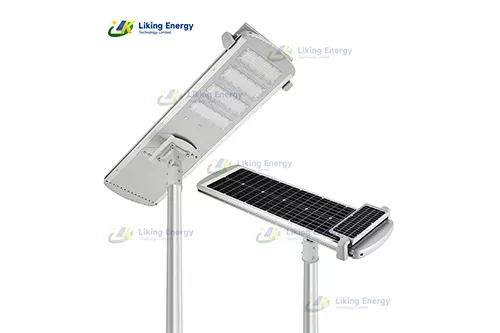
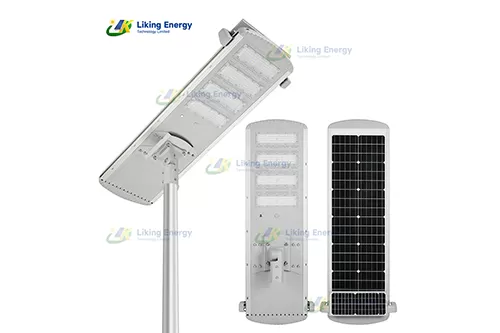
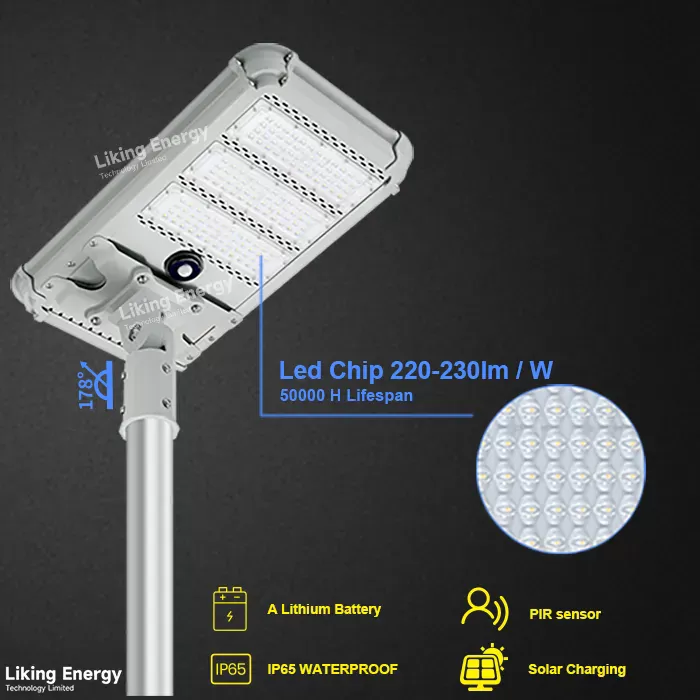
An all in one solar street light integrates the solar panel, battery, controller, and LED lamp into a single unit.
Advantages include:
Easy installation
Compact design
Lower transportation costs
Minimal maintenance
For example, a 30w all in one solar street light is commonly used for residential roads, garden lighting, pedestrian areas, and small commercial projects.
Split Type Solar Street Light
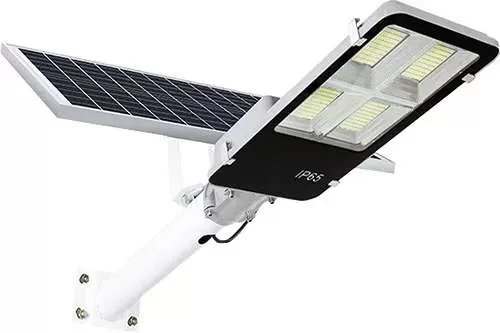
A split type solar street light separates the solar panel, battery, and LED lamp components.
This design offers:
Larger solar panel capacity
Higher lighting power
Flexible installation angles
Better performance for large-scale projects
A split solar street light is often selected for highways, airports, industrial parks, and areas requiring higher brightness.
Which Solar Street Light Is Best for Large Projects?
For large-scale lighting projects, split systems are usually more suitable because they provide greater flexibility in system design.
A split type solar street light allows engineers to independently select:
Solar panel size
Battery capacity
LED power rating
Installation height
This makes it easier to meet demanding lighting requirements.
For example:
Residential streets → 30W–60W all-in-one systems
Parking areas → 60W–100W systems
Main roads and highways → High-power split solar street lights
Working with an experienced solar street light manufacturer helps ensure the system matches local climate conditions and project standards.
Do Solar Street Lights Work Better Than Traditional Lights at Night?
Yes, modern solar street lights can provide reliable nighttime illumination when properly designed.
Performance depends on:
Solar panel efficiency
Battery storage capacity
LED chip quality
Intelligent lighting control
Local sunlight conditions
High-quality solar systems use smart controllers that adjust brightness according to traffic conditions and battery levels, helping extend operating time.
Traditional street lights may provide consistent power, but they depend completely on grid availability and ongoing electricity expenses.
How to Choose Between Solar Street Lights and Traditional Lighting?
Before selecting a lighting system, project owners should evaluate:
Location Conditions
Solar street lights are especially effective in:
Areas with good sunlight exposure
Remote locations
Expanding urban areas
Places where cable installation is expensive
Lighting Requirements
Choose based on:
Road width
Required brightness
Pole height
Operating hours
Long-Term Cost
Although solar street lights may have higher initial equipment costs, they often provide better long-term value because they avoid monthly electricity expenses.
How to Choose a Reliable Solar Street Light Supplier?
Selecting the right supplier is essential for project success. Buyers should evaluate:
Product certifications
Manufacturing capability
Battery quality
Warranty policy
Customization options
Project experience
Reliable solar street light companies usually provide complete solutions, including product selection, technical support, and after-sales service.
A professional solar street light manufacturer like Liking Energy can offer different configurations, including integrated and split solutions, to meet various global project requirements.
Conclusion
Solar street lights have become a strong alternative to traditional street lighting by combining renewable energy, efficient LED technology, and flexible installation options. While traditional lighting still has advantages in certain urban environments, solar solutions provide greater value for many modern infrastructure projects.